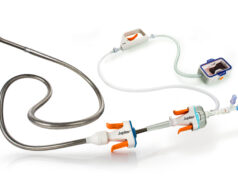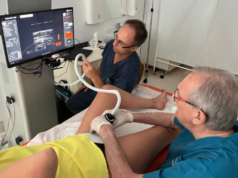

Gore today announced US Food and Drug Administration (FDA) approval of the Gore Viabahn Fortegra venous stent, which the company notes is the first device for the treatment of deep venous disease in the inferior vena cava (IVC), iliac and iliofemoral veins. The approval is supported by late-breaking clinical data presented at The VEINS 2025 (1–2 November; Las Vegas, USA).
Previously known as the Gore Viafort vascular stent, the Fortegra venous stent is specifically engineered to treat patients with deep venous disease. It consists of an open-structure, self-expanding wire-wound nitinol frame and an expanded polytetrafluoroethylene (ePTFE) polymer lattice.
According to Gore, this technology helps provide an “optimal” balance and “unique” combination of allowing the stent to conform to the natural anatomy while providing compression resistance throughout the entire device. Featuring a wide range of sizes, the Fortegra venous stent is appropriate for a wide range of patient anatomies.
Gore received Breakthrough Device designation from the FDA for the Fortegra venous stent. This programme helps expedite the development and FDA review of medical devices that offer more effective treatment for life-threatening or irreversibly debilitating diseases or conditions.
The international clinical trial was the first prospective trial of its kind to include IVC, iliac and iliofemoral veins, Gore shares in a press release. The device was demonstrated to be both safe and effective for its indicated use in 89 patients treated with deep venous disease. The study included a patient population with extensive disease burden: all were treated for thrombotic disease (acute, subacute and post-thrombotic syndrome), 94.3% of patients had lesions that span three vessel regions (IVC plus bilateral iliofemoral veins) and 68.5% required stents that extended below the inguinal ligament into the common femoral vein.
Despite the study consisting of patients with extensive disease burden, 12-month primary patency was achieved in 83.4% of patients. Further, results demonstrated 96.5%, 88.9% and 89.8% primary patency in the IVC, left iliofemoral and right iliofemoral vessel regions, respectively. There were no stent embolisations/migrations, fractures, vascular injuries or clinically significant pulmonary embolisms through 12 months. There were also no device-related deaths or major bleeding through 30 days. Overall, the study met its 12-month composite efficacy and safety primary endpoint.
“The Fortegra venous stent represents a significant advancement in the treatment of patients with the most difficult-to-treat venous obstructive pathology; occlusion of the inferior vena cava, iliac veins and inflow femoral veins,” says Kush Desai (Northwestern University, Chicago, USA), national primary investigator for the Fortegra clinical trial. “Patients will benefit from a device that is designed specifically for this disease and its unique anatomic and physiologic challenges, including preservation of optimal flow dynamics through iliocaval confluence and side branch preservation.”