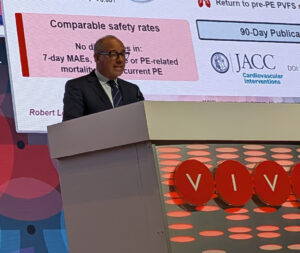
A subset analysis of the landmark STORM-PE randomised controlled trial (RCT) demonstrated a significant correlation between real-world, daily step-based activity as captured on a consumer wearable device and patient performance in the clinical six-minute walk test. The findings were presented at the 2026 Vascular InterVentional Advances (VIVA) annual meeting (4–7 October, Las Vegas, USA).
The STORM-PE RCT assessed patients with acute intermediate-high risk pulmonary embolism (PE) who were treated with computer-assisted vacuum thrombectomy (CAVT) plus anticoagulation compared to anticoagulation alone. Data from the trial showed patients treated with CAVT plus anticoagulation experienced improved right ventricular recovery and achieved greater functional improvement compared to anticoagulation alone.
A cohort of the trial patients were discharged with a fitness watch to track a patient’s activity, including actigraphy measures during everyday living. STORM-PE investigators performed a correlation analysis between watch actigraphy (daily total step count, walking bout data, and daily peak steps) and made comparisons to the six-minute walk test performed at 30- and 90-day follow-up visits.
“STORM-PE is the first RCT in pulmonary embolism therapy to incorporate data from a consumer wearable device, representing an important step forward in understanding how office assessed clinical improvements translate into meaningful real-world recovery,” said Robert Lookstein (Icahn School of Medicine at Mount Sinai, New York, USA), global co-principal investigator of STORM-PE.
The analysis showed that total daily step count, walking bout length, number of walking bouts, walking bout duration and peak 10-minute step count were significantly correlated with 30-day six-minute walk test performance; correlations were strongest with temporally matched wearable and clinic data at 30 days and attenuated with 90-day follow-up data; and wearable technology provides a complementary measure of functional recovery after PE.