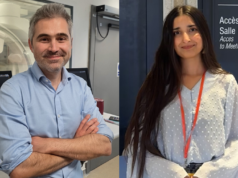

Mounir ‘Joseph’ Haurani (East Carolina University, Greenville, USA) speaks to Venous News about the current state of deep vein thrombosis (DVT) care, highlighting opportunities for improvement in the period following hospital discharge.
In 2026, what are some of the most pressing issues related to DVT management?
More than 900,000 Americans are affected by venous thromboembolism (VTE) annually. Of those, 60–100,000 will die from complications of VTE, with a third of deaths directly related to recent hospitalisations. With this in mind, I would say we’re missing an opportunity to better predict who’s going to be at risk when they leave the hospital. Our post-hospitalisation care is where I think we need to focus.
The other significant part of this is we’re working with tighter and tighter healthcare dollars and growing concerns over increased costs and the effects these have on the overall economy for Canada and the USA. It’s not just the short-term complications that we need to be concerned with and the mortality and morbidity associated with VTE, but the overall impact that it’s having on our healthcare expenditure system.
Why is it that patients face an elevated DVT risk after leaving the hospital?
We have been taught to focus on the first two weeks after a traumatic injury, surgery or hospitalisation as the riskiest timeframe for developing DVT because that’s when patients are at the highest risk for immobility, injury to their veins and stasis of blood flow. But what we often ignore is the fact that, longer term, those risks don’t go away once you leave the hospital. Patients don’t recover immediately after a two-week period. It takes, on average, several weeks to months for the normal homeostasis and physiological systems of the body to recover and get back to baseline.
There’s also the compliance issue when a patient leaves a monitored setting. If a patient cannot afford their medication, they may not take it; if a family member cannot take time off work to provide transport to the physical therapy office, the patient may not be able to mobilise as needed postoperatively. So there are big social risk factors that we don’t always take into account because we’re so focused on that in-hospital episode of care.
Where are the opportunities for change?
Heightening awareness through traditional media outlets and social media is very helpful, as well as big national pushes through societies like the American Venus Forum (AVF) and the Society for Vascular Surgery (SVS), and initiatives such as DVT Awareness Month.
On the technology front, I think we’re seeing a real shift towards more active management of DVT. Catheter-directed therapy has shifted our thinking around DVT management. I think once we’re able to reduce the risk of bleeding by doing something that’s mechanical instead of relying on thrombolysis, and we have the ability to clear that clot quickly, we’re going to see some improvements in both short- and long-term results. I think these active systems that give you almost immediate relief from that obstruction are very exciting and represent a paradigm shift in how we’re going to treat patients with DVT. Quicker and more thorough removal of clot with lower procedural risks will potentially reduce the long-term morbidity DVT can cause.
Moving forward, we really need to leverage the artificial intelligence (AI) technology and the advanced computing that we now have available. Taking the example of patient-reported outcomes, for example, these are currently very binary—my leg swells, my leg doesn’t swell—but I think there are subtle signs that we just don’t pick up on or think about, or they happen gradually enough that the patient may not pay attention to them, which technology could help us pick up on. I’m really excited about the opportunity presented by some wearable devices to provide the data needed to manage the patient before they get a more chronic and severe illness related to DVT.
I do think we need more guardrails that are not necessarily passive, but are there in the background. A great example of this is the seatbelt warning sound in cars. This and other systems have been built to improve the safety of driving. You take them for granted, but they are there when you need them. I think that’s the exciting part of medicine, that there are opportunities where you can build in similar guardrails to heighten awareness in a way that isn’t intrusive.
What is your key message for DVT specialists at this time?
So much of what we focus on is the episode of care in the hospital. We have excellent acute-phase data. I think the deficit and what we need to do going forward is leverage the technology and the data that we have to improve long-term outpatient management. That’s where the research needs to go in the next decade. We do really well up front. It’s how we manage and prevent DVT once the patient leaves our immediate care that needs addressing. I think that’s where the exciting research and data are going to come from.
We also need to think about how health system issues might be failing these patients. When you look at the patients who are at the highest risk for VTE, the episode of care is often a 90-day period, and you’re not paid for the chronic care of these patients. The system itself is just not set up to do that preventative outpatient care because of the fee payment system and the way the US healthcare system works. That’s why I think we need to shift from it being an active process done by healthcare providers to one where we can rely on smarter computers and AI systems to help us do some of that work.
Lastly, if patients do develop VTE, I think the new technologies we have for removing them quickly and with lower risks will help prevent the long-term disability that chronic clots may cause.