
A position statement endorsed by the American Venous Forum (AVF) and the American Venous and Lymphatic Society (AVLS) marks out a non-pneumatic compression device (NPCD) as a “therapeutically advanced hybrid approach” that is a “safe and effective”—as well as user-friendly—alternative to pneumatic compression devices in the treatment of patients with lymphoedema.
The statement refers to a device initially cleared in 2021 by the US Food and Drug Administration (FDA) as a prescription-only NPCD indicated for the treatment of lymphedema, phlebolymphedema, venous insufficiency, lipedema and chronic edema-related conditions: the Dayspring (Koya Medical) mobile, non-pneumatic compression. It supports active mobility during treatment—in the clinic or at home—and consists of a compact, mobile-powered controller and limb-specific garments that deliver programmable, therapeutic sequential gradient compression. “Unlike traditional PCDs, the NPCD does not rely on stationary air compressors or air-inflated sleeves, offering a more streamlined, user-friendly alternative for edema management,” the statement reads.
NPCD has been used to treat more than 10,000 patients and clinically evaluated in 11 research studies, the statement authors point out. Led by former AVF president Glenn Jacobowitz (Northwell Health, New York, USA) et al, they list, among others, two large, prospective, multicentre, randomised, head-to-head comparative effectiveness trials—”both of which demonstrated NPCD’s safety, efficacy and clinical superiority over current of standard care, advanced pneumatic compression”.
Published in JVS-VL in 2024 by senior investigator Thomas Maldonado (New York University, New York, USA) and colleagues, one, the randomised, crossover head-to-head TEAYS (Treatment effectiveness of a non-pneumatic compression device versus an advanced pneumatic compression device for lower extremity lymphoedema swelling) study, demonstrated that patients using NPCD experienced a mean limb volume reduction of 369.9mL, significantly greater than the 83.1mL reduction observed in the advanced PCD treatment arm.
In terms of quality of life, TEAYS showed significant improvements in the overall Lymphedema Quality of Life Questionnaire (LYMQOL) scores for NPCD users, with a mean improvement of 1.01 compared to 0.17 for advanced PCD users, the study team reported. Meanwhile, NPCD users demonstrated an adherence rate of 81%, significantly higher than the 56% adherence observed in the advanced PCD group.
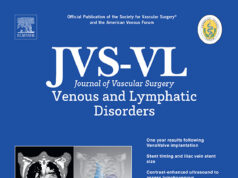
The AVF-AVLS-endorsed position statement was published in the March 2026 issue of the Journal of Vascular Surgery: Venous and Lymphatic Disorders (JVS-VL).
“Given its multimodal approach and patient-friendly design, NPCD should be considered after conservative treatment failure and included in future guideline assessments,” the authors conclude in JVS-VL. “By addressing common limitations of advanced PCDs, NPCD provides an effective compression solution that enhances both lymphatic and venous return and offers clinicians access to a distinct, clinically validated and patient-centric treatment option that improves outcomes while reducing barriers to adherence.”