ThinkSono today announced that the US Food and Drug Administration (FDA) has granted 510(k) clearance for ThinkSono Guidance, software that provides real-time guidance to non-ultrasound-trained healthcare professionals during the acquisition of vascular ultrasound images.
ThinkSono Guidance is indicated for adult patients who require a lower-extremity compression ultrasound exam for the evaluation of suspected deep vein thrombosis (DVT). According to ThinkSono, it is the first artificial intelligence (AI)-powered ultrasound guidance software cleared by the FDA for the evaluation of suspected DVT. The device previously received FDA Breakthrough Device designation in February 2026.
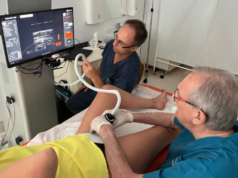
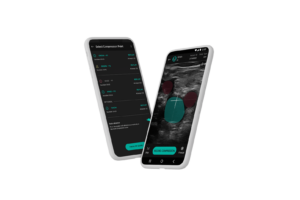
The ThinkSono Guidance Mobile App connects to compatible FDA-cleared handheld point-of-care ultrasound scanners and uses an AI algorithm to guide the operator in real time through probe positioning and the recording of venous compression cine-loops, so that the anatomical sites relevant to lower extremity DVT are consistently imaged.
In clinical studies, operators performed exams after 60 to 90 minutes of standardised training. Recorded cine-loops are transmitted to the ThinkSono Guidance Dashboard, where a remote qualified clinician grades image quality and assesses vein compressibility. ThinkSono states that the software does not assist in the interpretation of ultrasound images, and all clinical decisions remain under the authority of the qualified clinician.
The clearance is supported by prospective, double-blinded, multicentre clinical investigations comparing ThinkSono Guidance exams performed by non-ultrasound-trained operators against reference-standard specialist duplex ultrasound. The pivotal US study enrolled 594 patients across five sites; in total, 1,691 patients were recruited across 24 US and international sites, including 157 confirmed DVTs.
In a pooled analysis, exams achieved adequate diagnostic image quality in 87.1% of cases, with sensitivity of 92.9% (95% confidence interval [CI]: 86.3–96.4%) and prioritisation specificity of 97.1% (95% CI: 94.6–98.5%). Median operator scan time was 5 minutes 24 seconds, and median remote review time was 2 minutes 13 seconds. Performance was consistent across demographic subgroups, including age, sex, body mass index (BMI), and race/ethnicity.
“DVT is common, dangerous, and treatable, yet whether a patient gets scanned quickly still depends on where and when they happen to present,” said Fouad Al-Noor, chief executive officer (CEO) and co-founder of ThinkSono. “This clearance means a nurse or clinician at the bedside, guided by our software, can capture the images a specialist needs, and a qualified clinician can review them remotely within minutes. We believe this can meaningfully expand access to DVT assessment across the US healthcare system.”
“This technology has the potential to significantly improve patient outcomes by accelerating DVT assessment and the care that follows,” said Michael Blaivas, chief medical officer (CMO) of ThinkSono. “By enabling a much wider range of healthcare professionals to capture these images, we can reach patients faster and reduce delays to lifesaving treatment.”