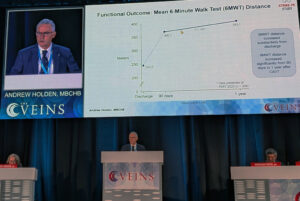
Investigators presented a new interim analysis of 1,000 prospective patients from the STRIKE-PE trial, looking at one-year functional outcomes and quality of life for pulmonary embolism (PE) patients after computer-assisted vacuum thrombectomy (CAVT), demonstrating that functional status and capacity were sustained and continued to improve out to one year, the Venous Endovascular Interventional Strategies (The VEINS) 2026 annual meeting (3–4 October, Las Vegas, USA) heard.
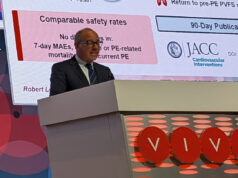
STRIKE-PE continues to support the safety and effectiveness of CAVT (Penumbra), including short device times and low adverse events, for treating PE, presenter Andrew Holden (Auckland City Hospital, Auckland, New Zealand) told delegates. The study also found longer-term functional outcomes and quality-of-life benefits, including sustained reduced dyspnoea, increased walking distance, restored functional status and improved quality of life.
“Functional status [NYHA (New York Heart Association) class] was restored at 90 days, then sustained to one year,” Holden said. “Functional capacity [six-minute walk test distance] continued to improve, with increased distance from 90 days to one year. Improvements in dyspnea at rest and in quality of life from baseline to 90 days continued or were sustained to one year.
“These findings suggest sustained clinical benefit and potential for reduced burden of post-PE syndrome after treatment with CAVT.”
STRIKE-PE is a prospective, international, multicentre study evaluating real-world safety, performance and long-term functional and quality-of-life outcomes of CAVT in up to 1,500 patients.