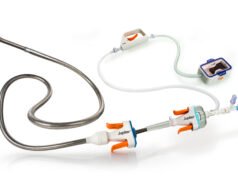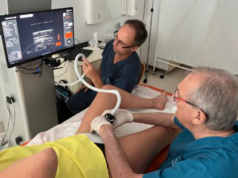
 Penumbra has announced that the US Food and Drug Administration (FDA) has granted clearance for the treatment of deep vein thrombosis (DVT) to its Lightning computer assisted vacuum thrombectomy (CAVT) technology. The indication is supported by results from the BOLT-DVT investigational device exemption (IDE) trial.
BOLT-DVT was a prospective, multicentre IDE trial that demonstrated first-line use of CAVT for DVT to be safe and effective, the company says in a press release.
“The standard treatment for DVT has been anticoagulation and there has not been a meaningful change in standard of care for decades,” said Patrick Muck, co-principal investigator of BOLT-DVT and vascular surgeon at TriHealth in Cincinnati in Ohio, USA. “Anticoagulation primarily prevents clot progression and does little to remove the existing clot. The BOLT-DVT trial showed that CAVT delivered rapid clot removal, durable patient-reported pain relief and a low rate of re-thrombosis. The data resulted in the first cleared indication for the treatment of DVT amongst mechanical thrombectomy devices, underscoring the potential of CAVT to advance the treatment algorithm of DVT and improve patient outcomes.”
BOLT-DVT enrolled patients with iliofemoral DVT, building on the historical precedent set by the ATTRACT randomised controlled trial but with modern technology. Some 98% of patients experienced complete or near-complete thrombus removal, with a median device time of 18 minutes and a 48-hour major adverse event rate of 3.1%. These procedural outcomes were accompanied by a low re-thrombosis rate and improvements in patient-reported and clinician-assessed outcomes, including reduced pain and symptoms, and improved quality of life.
Additional findings included no device-related deaths or serious device-related adverse events, and a re-thrombosis rate of 3.9% within 30 days. Thirty-day patency rates ranged from 88.8% to 96.3% across treated vessels, and 84.3% of patients had no post-thrombotic syndrome (PTS) symptoms (Villalta 0–4) at 30 days. Median leg pain severity fell from 5 (moderate to severe) at baseline to 0 (no pain) immediately after the procedure and at 30 days. Median VEINES-QOL scores improved from 49.3 to 84.2 at 30 days.
“In the BOLT-DVT trial, treatment with CAVT successfully restored lower extremity deep venous flow in a single session,” said Kush R Desai, co-principal investigator of BOLT-DVT and interventional radiologist at Northwestern Medicine in Chicago, USA. “Perhaps more significant, patients felt immediate pain relief and by 30 days, there was significant improvement in venous stasis symptoms that included lower extremity pain and swelling. These findings provide clinicians with important evidence supporting the benefits of advanced intervention, such as CAVT, as a first-line treatment for acute iliofemoral DVT.”
James F Benenati, chief medical officer at Penumbra, added: “DVT remains an underestimated health issue that can lead to serious, potentially life-threatening complications. This cleared treatment indication and the BOLT-DVT findings support advanced intervention for DVT and highlight the potential impact of CAVT on patient symptoms, quality of life and long-term clinical outcomes.”
Penumbra’s CAVT portfolio incorporates Lightning Flash technology, which uses pressure- and flow-based aspiration control algorithms during thrombectomy procedures to detect blood clot and blood flow. The company says the portfolio is designed to facilitate clot removal with speed, safety and simplicity.